“`html
As technology continues to reshape industries and career landscapes across Malaysia, young people face mounting pressure to develop skills that extend far beyond traditional academics. STEM robotics and artificial intelligence represent two of the fastest-growing fields, yet many students struggle to find accessible, hands-on learning environments where they can explore these subjects meaningfully. Whether your child is curious about how robots work, fascinated by machine learning, or considering a technology-focused career path, understanding how to introduce STEM robotics and AI in Johor Bahru (JB) opens doors to practical knowledge and future opportunities.
The demand for professionals skilled in robotics and AI continues to accelerate globally and within Malaysia. Yet many young learners find traditional classroom approaches insufficient for grasping these complex, practical disciplines. They need spaces where they can build, experiment, troubleshoot, and see immediate results—environments that bring theory to life through tangible projects and interactive exploration.
This article explores what STEM robotics and AI education entails, why it matters for young people today, the genuine benefits of hands-on learning, common obstacles you may encounter, and how to evaluate programmes and venues in your area. We will also discuss how established facilities in Johor Bahru can support your learning goals.
What STEM Robotics and AI Learning Involves
STEM robotics and artificial intelligence education combines science, technology, engineering, and mathematics with real-world problem-solving. Rather than learning these subjects in isolation, students work with physical robots, programming languages, sensors, and AI algorithms to design, build, and refine working systems.
Robotics typically begins with assembly and basic programming—students construct robots from kits or component parts, then write code to make them move, respond to their environment, or complete specific tasks. Advanced projects might involve autonomous navigation, obstacle detection, or multi-robot collaboration.
Artificial intelligence education focuses on how machines learn from data, recognise patterns, and make decisions. Students explore machine learning concepts through practical applications: training models to classify images, predict outcomes, or understand natural language. These disciplines overlap frequently; a robot with AI capabilities can perceive its surroundings, learn from experience, and adapt its behaviour accordingly.
Effective programmes balance hands-on experimentation with conceptual understanding. Learners build confidence by succeeding at tangible challenges whilst simultaneously internalising the mathematical and logical principles that underpin their creations.
Key Benefits of STEM Robotics and AI Education
Develops Problem-Solving and Critical Thinking Skills
When a robot fails to complete a task or an AI model produces unexpected results, students must diagnose the root cause. Was the code incorrect? Did the sensors misread the environment? Is the algorithm training data inadequate? This iterative troubleshooting builds resilience and teaches learners to break complex challenges into manageable steps—skills that apply far beyond technology. Students learn to ask the right questions, gather evidence, and test hypotheses systematically.
Makes Abstract Concepts Tangible and Memorable
Programming loops, conditional logic, and machine learning algorithms can seem abstract in theory. When students see a robot execute a loop fifty times in sequence, or watch an AI model’s accuracy improve after feeding it more training data, abstract concepts snap into focus. This concrete experience strengthens retention and deepens understanding. Learners remember what they have built and experimented with far more vividly than material they have only read or heard about.
Fosters Creativity and Innovation
Robotics and AI projects rarely have a single correct solution. Students might design a robot arm to pick up objects using different mechanical approaches, or train an AI model using various algorithms and datasets. This creative freedom encourages young people to think imaginatively within technical constraints. They learn that engineering and computer science are not rigid disciplines but fields where originality and experimentation drive progress.
Builds Collaborative Teamwork in Technical Contexts
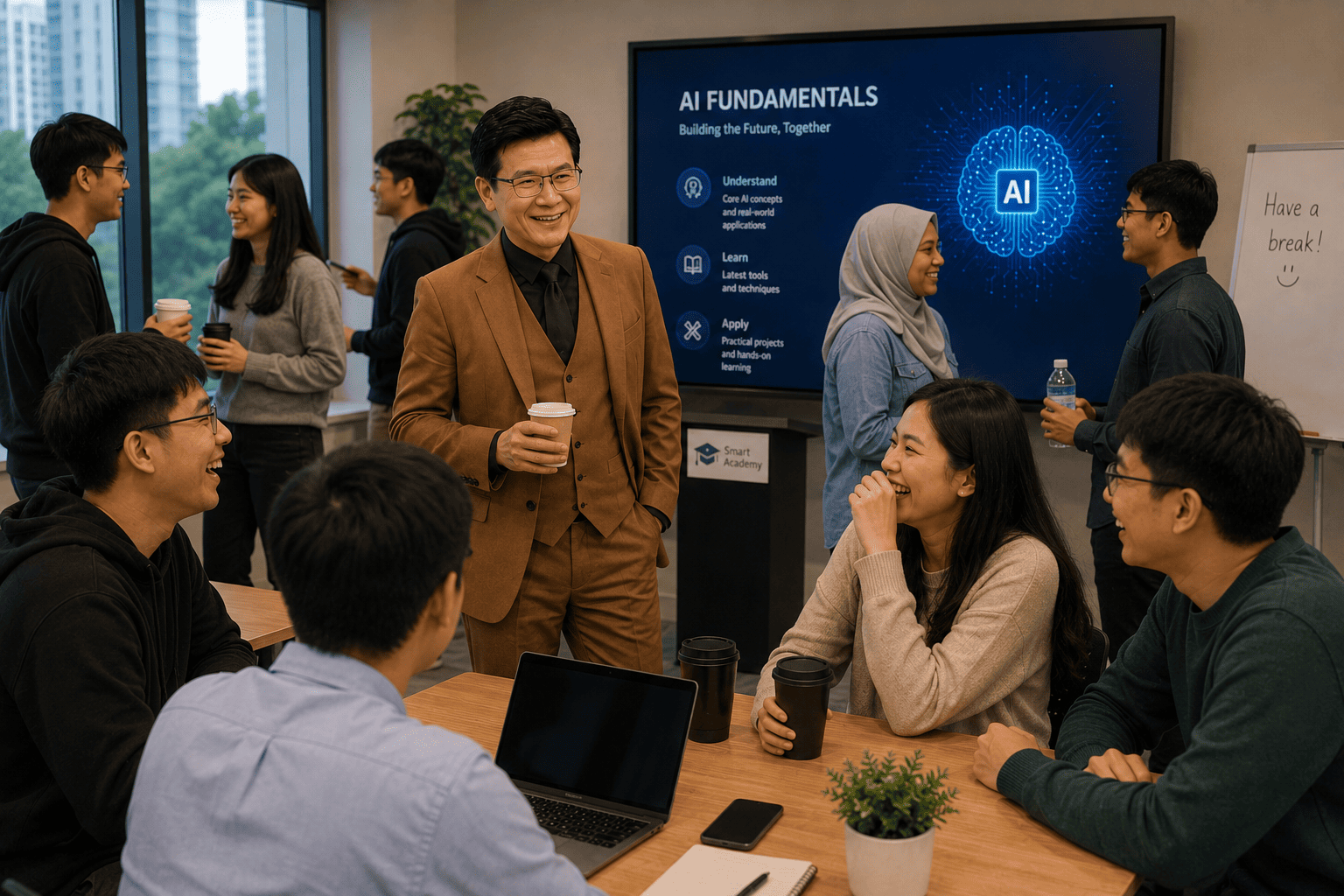
Most real-world STEM projects require collaboration. One student might focus on mechanical design whilst another handles programming; a team might divide robot-building tasks by subsystem. Working together on shared technical goals teaches communication, delegation, and how to integrate different perspectives. Students learn to explain technical ideas to peers, defend design choices, and adapt when someone else’s approach proves superior. These soft skills complement technical knowledge equally.
Clarifies Career Pathways and Real-World Applications
Exposure to robotics and AI helps students understand where these technologies appear in everyday life: manufacturing automation, healthcare diagnostics, autonomous vehicles, smart homes, and countless other fields. This clarity helps young people make informed decisions about further study and career direction. Many discover genuine passion for technology when they see how it solves authentic problems, rather than treating subjects as abstract academic requirements.
Boosts Confidence in STEM Subjects Generally
Some learners struggle with mathematics or physics in traditional formats but thrive when these subjects become tools for building something tangible. Success in hands-on projects often reverses negative self-perception: a student who thought they were “not a maths person” may realise they simply needed a more engaging learning context. This confidence boost often extends to other academic areas and encourages further exploration of technical fields.
Common Challenges and Considerations
Several obstacles frequently emerge when learners pursue STEM robotics and AI education:
- Equipment cost and access: Robotics kits and AI software platforms vary widely in price. Programmes offered in shared facilities reduce individual expense but may require travel or adherence to fixed schedules.
- Steep learning curves early on: Initial frustration with syntax errors, mechanical assembly, or debugging can discourage beginners if support is insufficient. Quality instruction and patient mentorship make this phase manageable.
- Outdated or misaligned curriculum: Technology evolves rapidly. Programmes using obsolete tools or languages may not reflect current industry practice, limiting practical relevance for students considering technical careers.
- Insufficient hands-on time: Some programmes emphasise theory over experimentation. Students benefit most when they spend significant time actually building and coding, not merely watching demonstrations.
- Lack of diversity and representation: STEM fields historically underrepresent women and minorities. Inclusive programmes that actively welcome all learners create healthier, more innovative cohorts.
- Limited progression pathways: Beginner-level robotics experiences matter, but learners also need opportunities to advance to intermediate and advanced projects that maintain engagement and deepen expertise.
How to Select and Plan a STEM Robotics and AI Programme
Assess your learner’s starting level. Is this their first exposure to programming or robotics, or do they have prior experience? Programmes should match their current knowledge; misalignment—either too simple or too advanced—reduces motivation and learning.
Clarify learning objectives. Do you want foundational exposure, preparation for competitions, career-pathway clarity, or advanced mastery? Different programmes suit different goals. Some focus on breadth across robotics, AI, and related fields; others specialise deeply in one area.
Evaluate instructor qualifications and teaching approach. Experienced instructors who combine technical expertise with patience and mentoring skill create supportive learning environments. Ask how they handle struggles, whether they tailor instruction to individual pace, and how they balance structured lessons with exploratory projects.
Review equipment and facilities. Does the programme offer reliable, current hardware and software? Are facilities clean, safe, and conducive to both focused work and creative experimentation? Visit if possible, or request detailed descriptions and photos.
Check practical access and scheduling. Location, timing, and frequency matter significantly. A programme that requires long travel times or clashes with school schedules may prove impractical despite excellence. Consider both initial commitment and long-term sustainability.
Investigate community and peer interaction. Learning alongside motivated peers energises progress. Ask about class sizes, whether learners work individually or in teams, and opportunities to showcase projects or participate in competitions.
Confirm progression opportunities. Can learners continue advancing if they wish, or do programmes end after one level? Sustained engagement often produces deeper learning and genuine skill development.
How Permas Guru Supports Learning in Johor Bahru
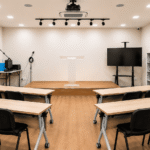
For families and educational organisations in Johor Bahru seeking quality venues for STEM robotics and AI learning, Permas Guru offers an established facility designed to accommodate youth programmes and specialised learning formats. Located in Bandar Baru Permas Jaya, the centre provides physical space and infrastructure suitable for hands-on technical education.
When evaluating whether Permas Guru aligns with your needs, contact them directly to discuss your specific requirements, verify current availability, and understand what support they can provide for robotics and AI learning initiatives. Their team can clarify facility features, capacity, and how they accommodate youth-focused technical education.
Permas Guru’s location in the Masai area of Johor Bahru makes it accessible for residents and institutions across the region seeking professional facilities for specialised STEM learning experiences.
Conclusion
STEM robotics and AI education equips young people with technical skills, problem-solving mindsets, and clarity about future pathways in fast-growing fields. Hands-on learning experiences that combine theory with tangible projects produce deeper understanding and stronger engagement than traditional classroom approaches alone. Whether your goal is introductory exposure, competition preparation, or advanced technical mastery, finding the right programme—one with qualified instructors, current equipment, suitable facilities, and a learning community—significantly influences outcomes.
As you explore STEM robotics and AI opportunities in Johor Bahru, prioritise programmes that balance accessibility with rigour, welcome learners at all levels, and foster both technical knowledge and collaborative skills. Evaluate venues carefully, ensuring they offer the hands-on environment, instructor support, and progression pathways your learner needs to thrive.
Ready to explore STEM robotics and AI learning in JB? Contact Permas Guru to discuss how their facilities can support your educational goals.
Permas Guru
36-01, Jalan Permas 10, Bandar Baru Permas Jaya, 81750 Masai, Johor, Malaysia
+6011-5354 9903 | sales@smartouch.com.my
“`